
Let me guess. You just got your GoPro, took it out for the first time, tried holding it at arm’s length to get a selfie with some epic scenery behind you, and realized your arm is approximately six inches too short for the shot you had in mind. Yeah, we’ve all been there.
A GoPro selfie stick sounds simple enough – a stick that holds your camera. But spend five minutes browsing options and suddenly you’re drowning in choices: floaty grips, tripod combos, extension poles with remotes, budget sticks under $15, GoPro’s own branded lineup… it’s a lot. And picking the wrong one genuinely does affect your footage quality and how much you enjoy using your camera day-to-day.
I’ve spent a fair amount of time using different GoPro selfie sticks across surfing, hiking, road trips, and general travel, so here’s an honest breakdown of what’s worth your money and what you can skip.
Who Actually Needs a GoPro Selfie Stick?
Short answer: anyone who uses their GoPro to film themselves doing anything. If you’re using it purely as a dashcam or mounting it to your helmet, you can probably stop reading. But if you’re hiking, surfing, vlogging, skiing, or even just walking around a city trying to get yourself AND the background in the same shot – a selfie stick is genuinely useful gear.
GoPro cameras have a wide-angle lens, which means they capture a lot of the surrounding environment. That’s actually what makes them great for adventure footage. But it also means you need more distance between the camera and your face to get a flattering, well-composed shot. A stick solves this immediately.
The Main Players: GoPro’s Own Line vs. Third-Party
Before jumping into individual products, it’s worth knowing there are basically two camps here: GoPro’s official accessories and third-party alternatives.
GoPro’s own sticks are pricier but built specifically for their cameras. They fit perfectly, feel solid, and some – like the Volta – add clever functionality you won’t find elsewhere. Third-party options can be just as good for basic use and often cost significantly less. The trade-off is usually build quality or feature depth.
Here’s what I’d actually recommend looking at:
1. GoPro Shorty – Best for Everyday Carry
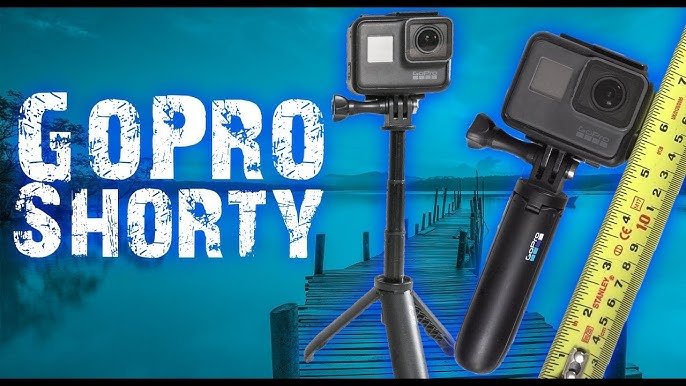
If I had to pick just one GoPro selfie stick for casual daily use, this would be it. The Shorty is small – barely bigger than the camera itself when collapsed – and it flips out into a tiny tripod stand too. It extends to about 8.9 inches, which isn’t a lot, but it’s genuinely enough for most selfies and wide-angle shots when you’re just out and about.
The tripod legs are the thing that makes it stand out. Being able to set it down on a table or a rock and step back for a proper shot is actually super useful. One thing I noticed pretty quickly is that it fits in your jacket pocket without even thinking about it, which sounds minor but matters enormously when you’re on a trail and don’t want extra gear jangling around.
Where it falls short: it’s short. That’s the point, technically, but if you want dramatic “drone-like” POV shots where you’re extending the pole way above your head, this isn’t going to cut it. It’s a casual everyday companion, not a filmmaking tool.
Best for: Travelers, casual adventurers, anyone who hates carrying extra gear.
2. GoPro Extension Pole + Waterproof Shutter Remote – Best for Adventure Sports
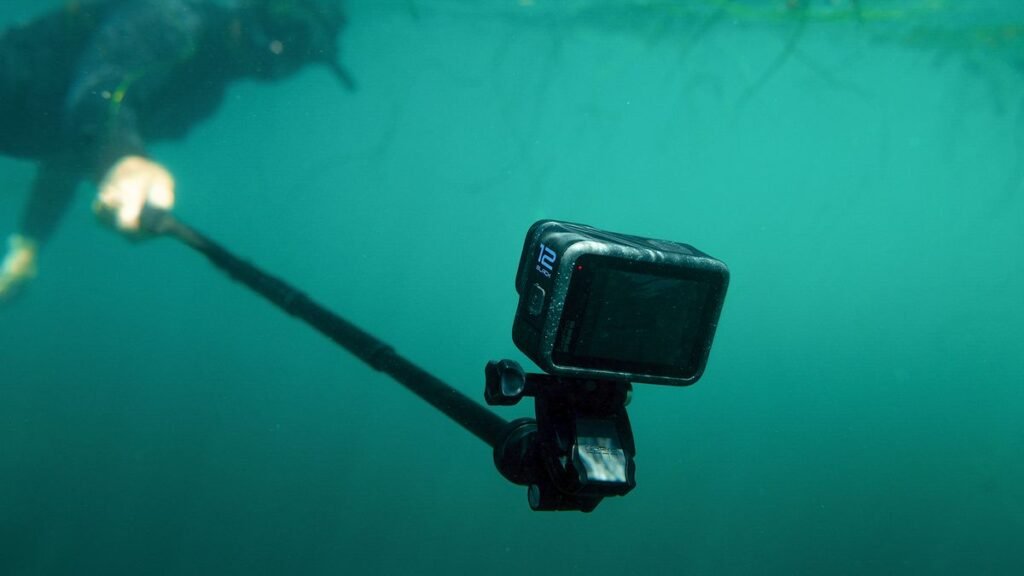
This is the proper extension pole. It collapses down to about 10 inches but extends out to 48 inches (122cm), which is genuinely impressive reach for creative angles. The aluminum build feels reassuringly solid, and the included Bluetooth remote is waterproof down to 5 meters.
Here’s where it gets interesting: the remote is what really separates this from cheaper poles. When your camera is fully extended over your head or out in front of you over water, reaching back to press the record button becomes awkward fast. Having a one-button remote on your wrist changes how you film completely – you just hit it without breaking your flow.
To be honest, the remote alone is almost worth the price of admission if you’re doing water sports. I’ve used it surfing and the ability to start and stop recording without fumbling is a real quality-of-life improvement.
One complaint you’ll see from users: the locking mechanism can get a bit stiff after salt water exposure if you don’t rinse it properly. Not a dealbreaker, but worth knowing.
Best for: Surfers, skiers, hikers who want dramatic POV shots.
3. GoPro MAX Grip + Tripod – Best for 360° Footage
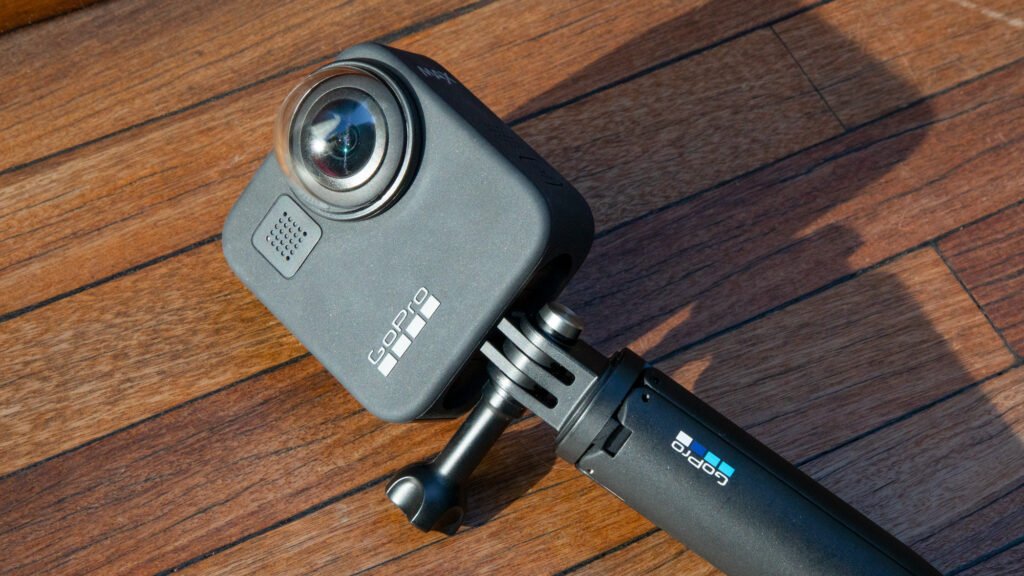
This one is specifically interesting if you’re using a GoPro MAX or MAX2 for 360° shooting. The clever thing with 360 cameras is that the software can remove the selfie stick from your footage entirely – it looks like the camera is just floating. But this only works reliably when the stick is thinner than the camera body and kept in line with it. The MAX Grip is designed specifically with this in mind.
It extends from 9 to 22 inches, which isn’t as long as the Extension Pole, but for 360 shooting that’s actually fine. The tripod mode is quick to deploy, which is handy for setting up static shots.
Best for: GoPro MAX users who want that floating camera effect.
4. GoPro Volta – Best for Long Recording Sessions
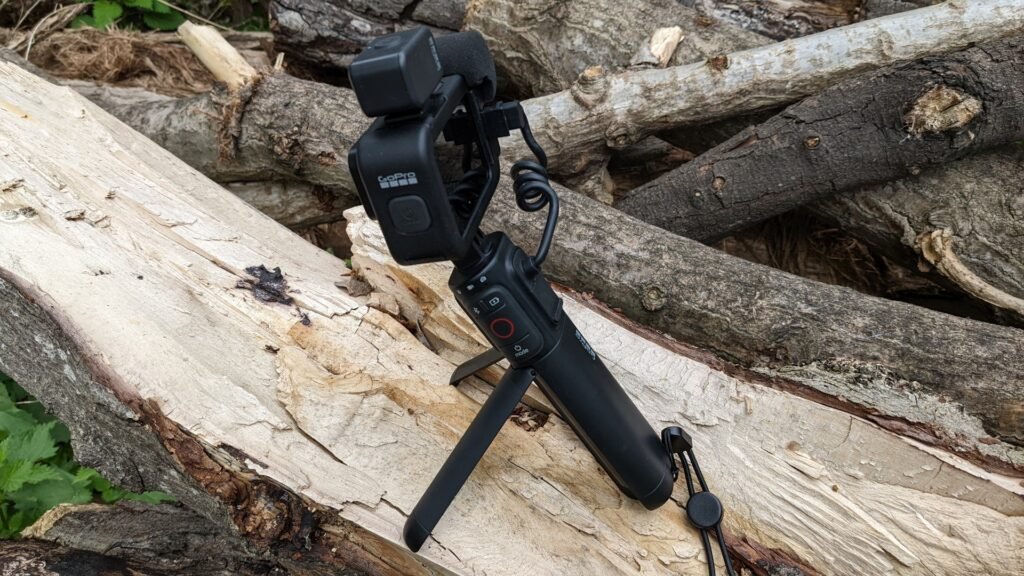
The Volta is a bit of a different beast. It’s a selfie stick that doubles as a battery grip, housing a 4900mAh battery that reportedly more than triples your recording time. There are physical buttons on the grip for controlling your camera, and it also flips out into tripod legs.
For anyone who records long-form content – think multi-hour hikes, full surf sessions, long travel days – battery anxiety with a GoPro is real. The camera eats power fast at high resolutions. The Volta addresses that problem directly.
The downside is it’s bulkier and more expensive than a basic stick. It’s also a bit overkill if you’re just taking occasional photos. But as a filming tool for dedicated content creators, it makes a lot of sense.
Also Read Best Waterproof Cases for GoPro Hero 13 in 2025: Honest Reviews from Real Divers and Riders
Best for: Content creators, anyone who’s always running out of battery mid-adventure.
5. Third-Party Budget Options – When You Don’t Need to Spend a Lot
Not everyone needs an official GoPro product. For basic selfie stick use – extending your reach, getting wider shots, setting up your camera on a surface – there are solid third-party options that work fine.
Brands like Smatree and Trehapuva come up consistently in GoPro user forums as reliable budget picks. They typically extend anywhere from 19 to 40 inches, have rubber grips, and cost a fraction of GoPro’s branded lineup. The trade-offs are usually thinner build quality, no waterproofing (or limited splash resistance only), and no integrated remote.
For general travel and casual use where you’re not throwing yourself off waves or down ski slopes, a decent third-party stick works fine. Just check that it uses a standard 1/4-20 thread or GoPro mount adapter – most do, but it’s worth confirming before buying.
Best for: Beginners, budget-conscious buyers, light use cases.
The Real-World Stuff Nobody Tells You
After using various GoPro selfie sticks, a few things stand out that don’t always make it into the product descriptions:
Length matters more than you think. The difference between a 20-inch and a 48-inch extension is dramatic for the kind of shots you can get. If you’re unsure, go longer – you can always not extend it fully.
The locking mechanism is critical. Cheap sticks often have sections that slowly creep in while you’re filming, which is incredibly annoying mid-session. GoPro’s own poles have better locking than most budget alternatives.
Waterproofing is about more than swimming. Even if you’re not in the water, sweat, rain, and general outdoor moisture happen. A stick that handles moisture confidently just gives you one less thing to worry about.
Third-party remotes are inconsistent. Some budget sticks come with Bluetooth remotes that work fine, others are genuinely unreliable. GoPro’s waterproof remote is much more consistent in my experience.
For 360 cameras, stick visibility is actually fixable. If you have a GoPro MAX or similar 360 camera, the “invisible selfie stick” effect in editing is legitimately impressive. But you need a thin stick that fits within the camera’s body profile. Not all sticks are slim enough.
Common Complaints Worth Knowing
Across Reddit threads and GoPro forums, a few issues come up repeatedly:
The official GoPro Shorty gets criticized for being too short for anything more than basic selfies. Fair criticism – it’s marketed as a mini tripod first, extension pole second.
The Extension Pole’s locking collar can corrode after repeated salt water exposure without proper rinsing. Rinse it with fresh water after every ocean session and it’s fine. Skip that and problems develop over time.
Budget sticks with integrated Bluetooth remotes often need re-pairing frequently, which gets old fast.
The GoPro Volta is occasionally criticized for adding bulk – which is true. It’s a chunky grip compared to a basic pole. That’s the trade-off for the battery life.
FAQ: GoPro Selfie Sticks
Q1: What is the best GoPro selfie stick for beginners?
The GoPro Shorty is the best starting point for beginners. It’s compact, doubles as a mini tripod, and fits in your pocket without any hassle. If you’re new to GoPro and just want something that works straight out of the box without overthinking it, the Shorty handles everyday selfies, travel shots, and casual vlogging perfectly well. For those on a tighter budget, a third-party option with a standard GoPro mount adapter works fine too while you figure out what you actually need.
Q2: Can I use any selfie stick with a GoPro camera?
Most selfie sticks work with GoPro cameras as long as they have a standard 1/4-20 inch thread or come with a GoPro mount adapter. That said, not all sticks are created equal for action use. If you’re surfing, skiing, or doing anything active, you want something with a solid locking mechanism and ideally waterproofing. A stick that’s fine for phone selfies at a birthday party might not hold up when you’re chest-deep in the ocean or on a snowy slope.
Q3: Is the GoPro selfie stick waterproof?
It depends on which one you choose. GoPro’s Extension Pole + Waterproof Shutter Remote is waterproof down to 16 feet (5 meters), making it a solid choice for water sports and underwater shooting. The GoPro Shorty and MAX Grip + Tripod handle splashes and rain without issues. Budget third-party sticks vary a lot here – some are fully waterproof, many are only splash-resistant, and some offer no water protection at all. Always check the specs if water exposure is part of your plan.
Q4: How long should a GoPro selfie stick be?
For most users, a GoPro selfie stick that extends between 20 and 48 inches covers the majority of real-world shooting scenarios. Shorter sticks around 8 to 10 inches work for quick selfies and setting up a camera on a flat surface, but they limit creative angles. If you want overhead shots, wide group footage, or that dramatic POV perspective where the camera is well out in front of you, aim for a stick that extends to at least 30 inches. The GoPro Extension Pole reaches 48 inches, which gives you a noticeably different range of shots compared to a compact stick.
Q5: Does the GoPro selfie stick work with all GoPro models?
GoPro’s official selfie sticks – including the Shorty, Extension Pole, MAX Grip, and Volta – are compatible with all current GoPro HERO and MAX models. Third-party sticks work with GoPro cameras as long as they have the right mount or adapter. One thing worth knowing: the GoPro MAX Grip + Tripod is specifically optimised for 360° cameras like the GoPro MAX, where keeping the stick hidden in footage requires a precise fit. For standard HERO models, compatibility is generally straightforward across most sticks on the market.
Q6: Is a GoPro selfie stick worth it compared to a gimbal?
They solve different problems. A GoPro selfie stick extends your reach and gives you more flexible shooting angles – it’s lightweight, simple, and usually costs well under $100. A gimbal stabilizes your footage electronically, smoothing out shakes and movement, but adds bulk, weight, and cost. For most GoPro users, a selfie stick is the better everyday choice because GoPro cameras already have solid built-in stabilization (HyperSmooth). A gimbal makes sense if you’re producing professional-level content where footage smoothness is critical. For adventure shooting, travel, and general vlogging, a good GoPro selfie stick is genuinely all you need.
So Which One Should You Actually Buy?
Here’s a clear-cut take:
If you want one versatile stick for most situations, get the Extension Pole + Waterproof Remote. The reach is excellent, the remote makes it genuinely useful for action sports, and it covers a wide range of use cases.
If you travel light and hate gear, the Shorty is the better fit. It disappears into your kit completely and handles 80% of real-world selfie stick scenarios.
If you’re a 360 camera user, the MAX Grip + Tripod is the right tool for that specific job.
If you record long sessions and battery life is a genuine issue, the Volta is worth the extra investment.
And if you’re just starting out and not sure how much you’ll use it, grab a decent third-party option first. See if you actually use it before spending on the premium version.
The GoPro selfie stick ecosystem is genuinely well thought out – there’s a real option for each type of user rather than one product trying to do everything mediocrely. That said, don’t overthink it too long. Any decent stick is vastly better than trying to stretch your arm another six inches. Ask me how I know.
