
There’s a moment every trekker goes through. You’ve climbed for two hours, the view is finally opening up, you want to document it hands-free because you’re gripping two trekking poles, and your GoPro is just… sitting in your pocket doing nothing. Or worse, it’s on your helmet, bobbing around with every step like a drunk seagull.
That’s when a GoPro chest harness starts making a lot of sense.
But here’s the thing nobody tells you before you buy one: not all chest harnesses are made for trekking specifically. Some are built for mountain biking, where you’re crouched over handlebars. Some are made for skiing. A harness that works brilliantly for a downhill run can be genuinely annoying on a six-hour trail hike, cutting into your shoulders, trapping heat, or pointing the camera straight at your chin instead of the trail ahead.
So if you’re after the best GoPro chest harness for trekking, this guide is worth reading before you spend money.
Who This Is Really For
This is for serious trekkers, hiking enthusiasts, trail runners, or anyone doing multi-hour walks in the mountains or forest who wants stable, hands-free footage without strapping something uncomfortable to their head. It’s also useful if you already own a chest mount that isn’t working well and you’re wondering why.
Quick note before we get into the picks: if you have a GoPro Hero 8 or newer, turn on HyperSmooth or Auto Boost before you start recording. It won’t fix a bad mount, but it will save decent footage from an okay mount. You’ll thank yourself later.
1. GoPro Chesty V2 (Performance Chest Mount) – Best for All-Day Trekking
Best for: Long distance hikers, trekkers who want lightweight comfort all day
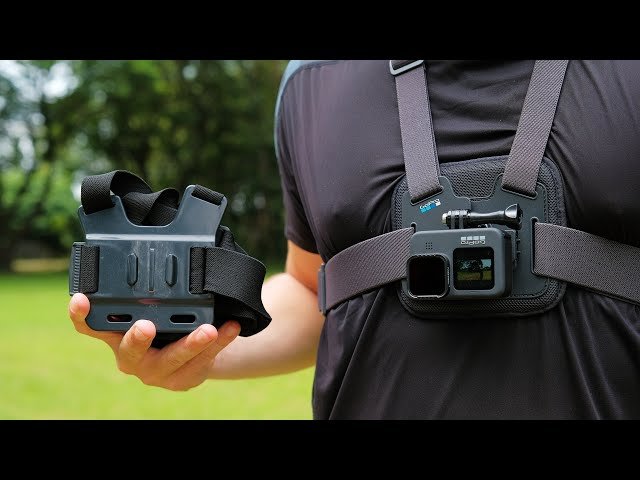
If you’re out for hours on a trail, the official GoPro Chesty V2 is honestly hard to beat for comfort. The redesigned version improved on everything that made the original frustrating. The chest plate has soft, breathable padding that’s over a centimetre thick, and after a while you genuinely forget it’s there.
It weighs around 136 grams. That might not sound like a big deal, but after a full day of hiking, every ounce counts. The four straps (two shoulder, two side) are all elasticated and adjustable, which means it fits comfortably over a lightweight base layer in summer and over a thick winter fleece in colder months. There’s also a large front buckle that you can work with gloves on, which is more useful than it sounds when you’re on a cold ridgeline.
One thing I noticed right away: it sits high enough on the chest to actually capture good trail footage. A lot of cheaper mounts position the camera too low, and you end up with footage of your feet and the middle of the path ten feet ahead. The Chesty V2, worn and tightened properly, gives you that forward-looking perspective that makes trekking footage look interesting.
The criticism that comes up most often is angle limitation. Unlike some third-party options, the Chesty V2 doesn’t have a ball joint. You can flip the mount adapter to angle the camera slightly, but fine-tuning the exact direction takes a bit of fiddling. Also, some women have reported that the default strap lengths don’t always work perfectly for their body shape, which is a genuine design gap.
What works: Comfort on long hikes, breathable materials, glove-friendly buckle, lightweight build, fits under or over a backpack fairly well What doesn’t: Limited camera angle adjustment, can be finicky to get right the first time, no ball joint for precise framing
Approximate price range: $35-45 / roughly equivalent internationally
2. Stuntman High Stability Chest Mount – Best for Serious Trail Footage Quality
Best for: Trekkers who prioritize video quality above everything else, technical trail hikers
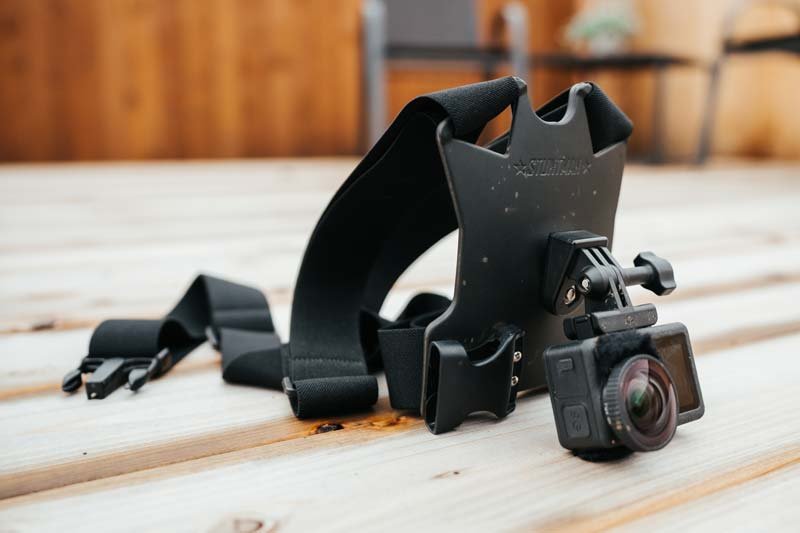
The Stuntman gets talked about constantly in serious action camera communities, and honestly the reputation is earned. The thing that sets it apart isn’t the straps or the buckle, it’s the base plate. It’s much larger than what you get on most harnesses, and it’s made from a semi-rigid shock-absorbing material that genuinely spreads and dampens movement across a wider section of your chest.
What that translates to in practice: less micro-jitter in your footage. On steep technical trails where your footing is uneven and your body is moving in all directions, the Stuntman gives you noticeably steadier footage compared to most competitors. Real-world testers on mountain biking and trekking forums consistently come back to say it outperforms the GoPro-branded option in terms of pure footage stability, particularly in demanding low-light conditions like forest trails where stabilisation software gets pushed harder.
Here’s where it gets interesting for trekking specifically. The Stuntman has a ball joint mounting system. That means you can rotate and angle the camera in ways that the standard J-hook style mounts simply don’t allow. Getting the right angle on uneven terrain, pointing slightly downhill on a descent or adjusting while wearing a heavy pack, becomes much less annoying.
The trade-off is bulk and breathability. It’s larger and stiffer than the Chesty V2. On a cool weather hike, that’s a minor issue. On a hot day at lower altitude or a humid forest trail, it’s noticeably warmer to wear. After around five or six hours, users consistently report some discomfort from the rigid plate pressing against the chest, especially if the harness is cinched very tight for stability.
Still, for anyone who wants the best trekking footage quality and doesn’t mind a slightly heavier setup, this is probably the pick.
What works: Significantly better footage stability, ball joint for precise camera angle, durable straps that don’t stretch out over time, impressive stability on rough terrain What doesn’t: Bulkier than lighter options, less breathable in heat, can cause discomfort on very long hikes if worn tight
Approximate price range: $28-35
3. TELESIN Chest Mount Harness (Breathable Version) – Best for Hot Weather Trekking
Best for: Trekkers in warm climates, day hikers who want a budget-friendly but quality option
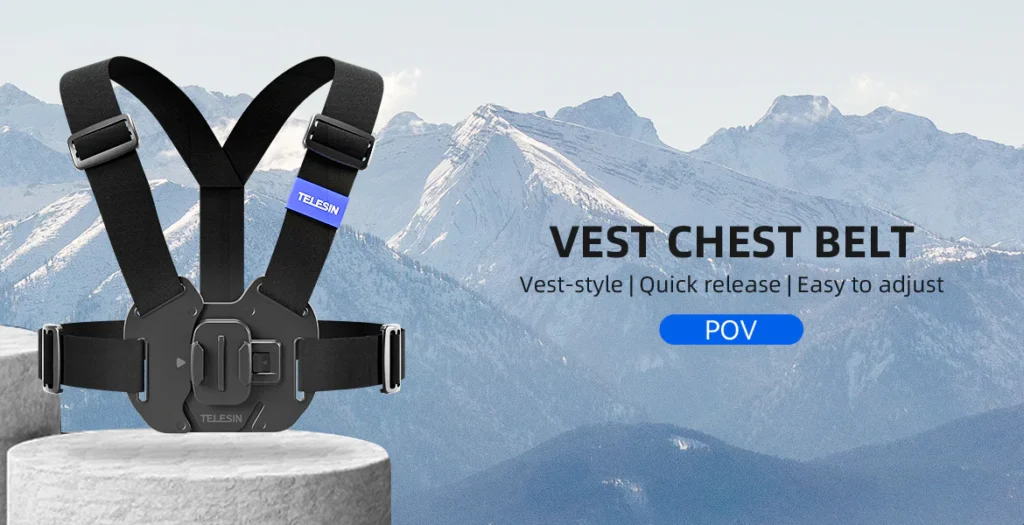
TELESIN makes some genuinely solid third-party GoPro accessories, and their breathable chest mount harness is worth taking seriously. The key word there is breathable. Where the official GoPro Chesty uses regular padding and the Stuntman uses a rigid elastomer plate, TELESIN’s breathable version uses materials that actually allow airflow, which makes a real difference on summer hikes or treks in warmer regions.
It comes with a J-hook included, fits everything from GoPro Hero 5 through to Hero 13 and newer, and the vest-style design makes it genuinely fast to put on and take off. No threading arms through complicated strap systems. Just slip it on, buckle, adjust, done. That might sound like a small thing but on a long day when you’re stopping and starting, it adds up.
The stability is good, not exceptional. On smoother trails and moderate pace hiking it performs well. On very rough terrain or scrambling sections, it shows some of that chest bounce that cheaper mounts are prone to. With a newer GoPro and HyperSmooth on, that’s largely corrected in-camera, but it’s worth knowing.
Some users on forums have noted the plate sits slightly higher on the chest compared to other mounts. That’s actually a positive for trekking footage because higher means better forward angle, but it also means the straps need adjusting to get comfortable for different body types.
To be honest, for the price point, this is excellent value if you’re doing regular hiking in mild to warm conditions and don’t want to spend on the Stuntman.
What works: Actual breathability for hot weather use, quick vest-style fitting, wide camera compatibility, comfortable for medium-length hikes What doesn’t: Less stability than Stuntman on very rough terrain, occasional fit issues for different body types
Approximate price range: $15-22
4. Sametop Chest Strap Mount Harness – Best Budget Pick That Actually Works
Best for: Casual hikers, occasional trekkers, anyone just starting out with GoPro chest mounting
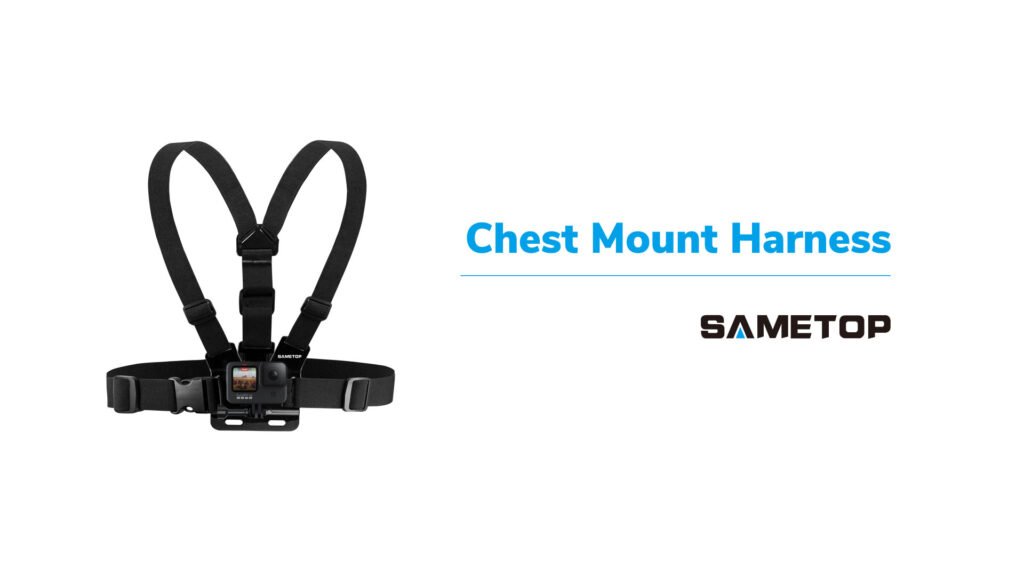
The Sametop is the one you buy when you’re not sure yet how much you’re going to use a chest harness but want something reliable that won’t embarrass you. It’s a straightforward, no-frills harness with a quick-release buckle, adjustable straps, and J-hook compatibility with essentially every GoPro model currently made.
What makes it stand out from other budget options is that the quick-release buckle genuinely works, and the strap quality is decent enough to hold up without the elastic going soft after a few months. Loads of casual trekkers have used these for years with no real complaints beyond the expected stability limitations.
The stability on smooth trails is perfectly fine. Walk up a moderate incline, stop to look at a view, your footage will look okay. Start scrambling over rocks or navigating uneven terrain aggressively, and the chest bounce becomes more obvious. Again, modern GoPro stabilisation handles a lot of this, so it depends partly on which camera you’re using.
One thing that comes up repeatedly in user feedback: if you plan to mount the camera upside down to improve the viewing angle, which many trekkers find gives better footage, the Sametop accommodates this easily. Flip the mount, flip the camera, go into your GoPro settings and enable the rotation, and you’re filming the right way up.
For someone going on occasional weekend hikes who doesn’t want to spend heavily on accessories, the Sametop is the sensible starting point.
What works: Reliable buckle system, good compatibility, budget-friendly, upside-down mounting works well What doesn’t: Not ideal for high-impact terrain, basic stability compared to premium options
Approximate price range: $12-18
5. Amazon Basics Adjustable Chest Mount Harness – The Honest Backup Option
Best for: Occasional use, backup harness, anyone needing maximum affordability
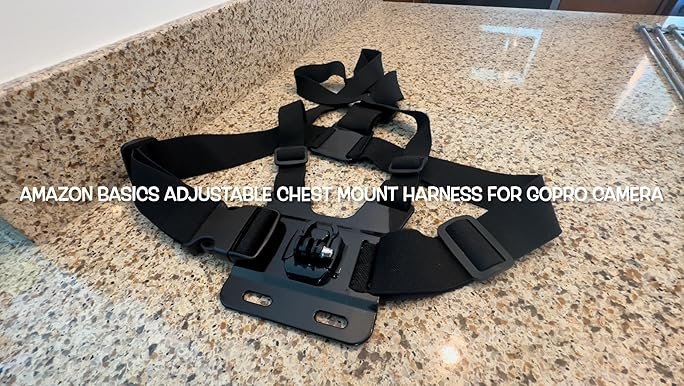
Yes, this is an Amazon Basics product. And yes, it works. Not brilliantly, but it works, and for what it is, that’s worth acknowledging.
The design is simple: elastic straps, plastic mounting plate, J-hook compatible, one-size-fits-most adjustability. For slow-paced walking, casual trail strolls, or as a secondary harness to keep in a kit bag, it does the job. The buckle is secure enough and the straps are surprisingly durable for the price point.
The honest limitations: the chest plate is stiffer and there’s no padding worth mentioning, so wearing it directly against skin on a warm day or for longer than two to three hours gets uncomfortable. In cold weather, the plastic clips can feel brittle. And stability on technical terrain is noticeably lacking compared to any of the harnesses higher on this list.
That said, reviewers who use this for lower-intensity activities like trail walking, wildlife photography hikes, or documenting family outdoor trips consistently report that it does exactly what it says. With a Hero 10 or newer and HyperSmooth doing its thing, the footage quality can actually be pretty decent.
Think of this as the gateway harness. Try it on a few hikes. If you find yourself wanting better stability or longer comfort, upgrade to the Chesty V2 or the TELESIN. If you use it once a month and casual hiking is all you do, you might just keep it.
What works: Genuinely affordable, works fine for casual light hikes, compatible with all GoPro models What doesn’t: Minimal comfort for long hikes, limited stability on rough terrain, basic build quality
Approximate price range: $10-15
The Angle Problem Nobody Warns You About
This deserves a proper mention because it trips up almost every first-time chest harness user.
When you’re standing upright, you angle the camera forward and it looks great. Then you start hiking and lean slightly forward as you climb, or you look down at your footing on a rocky section. Suddenly your footage is showing the top of your head, a blurry view of some rocks, and the occasional glimpse of sky.
The fix most experienced trekkers use is to mount the GoPro upside down. It sounds counterintuitive but there’s a setting in the GoPro menu called “Rotate” that automatically corrects the footage right-side-up. With the camera mounted upside down, the natural lean of your body while trekking results in a more forward-facing, natural perspective. It takes five minutes to figure out and makes a genuine difference to footage quality.
The Stuntman avoids this problem more elegantly because its ball joint gives you actual angle control. But on every other harness on this list, the upside-down trick is worth knowing.
A Quick Comparison
| Harness | Best For | Stability | Comfort | Price Range |
|---|---|---|---|---|
| GoPro Chesty V2 | All-day trekking | Good | Excellent | $35-45 |
| Stuntman High Stability | Max footage quality | Excellent | Good (not hot weather) | $28-35 |
| TELESIN Breathable | Warm climate trekking | Good | Very Good | $15-22 |
| Sametop | Budget/casual hiking | Moderate | Good | $12-18 |
| Amazon Basics | Casual occasional use | Basic | Moderate | $10-15 |
Final Verdict
After using it for a while across different trail conditions, the GoPro Chesty V2 is what most trekkers should buy first. It’s the best balance of comfort, breathability, and reliability for the kind of hiking most people actually do. It’s lightweight enough that you forget it’s there, and it’s compatible with every current GoPro model.
If you’re serious about footage quality and doing technical trails, spend a little extra on the Stuntman. The stability difference is real and visible, and the ball joint makes dialling in your angle much less frustrating.
Hot climate trekkers in particular should look seriously at the TELESIN breathable version. Breathability on a long summer hike is not a small thing.
And if you’re just starting out and not ready to commit, the Sametop is a reasonable first buy. It won’t disappoint for casual use and it’ll help you figure out what you actually want from a chest harness before spending more.
Frequently Asked Questions
Q: Is a chest harness better than a head mount for trekking?
For most trekking situations, yes. Head mounts translate every small head movement into camera movement, which can make footage uncomfortable to watch, especially if you’re frequently looking around on a busy trail. Chest harnesses give you more stable footage because your torso moves less than your head. They also leave your helmet uncluttered, which matters for safety. The trade-off is that chest footage captures more of your arms and gear, but most trekkers actually prefer that perspective because it looks more immersive and grounded.
Q: Can I wear a GoPro chest harness under or over a backpack?
Most chest harnesses, including the GoPro Chesty V2, can be worn over the top of a backpack’s shoulder straps without much trouble. Some trekkers prefer wearing the harness under the backpack shoulder straps for a more secure fit. The Stuntman’s wider straps can occasionally conflict with narrow backpack harnesses, so that’s worth checking before heading out. Generally though, running the chest mount over a light daypack works fine for most people.
Q: Why does my chest harness keep pointing the camera at the ground?
This is one of the most common complaints from new chest harness users and it comes down to how you wear it and how you position your body while trekking. The solution most experienced users recommend is to mount your GoPro upside down and enable the “Rotate” setting in the camera menu. This automatically flips the footage right-side-up and gives you much better control over the angle. When mounting upside down, you can tilt the camera more forward, counteracting your natural forward lean when climbing.
Q: How tight should I wear a GoPro chest harness for trekking?
Tight enough that the chest plate doesn’t bounce or flop around when you walk, but not so tight that it restricts deep breathing during climbs. A good rule of thumb: you should be able to fit two fingers comfortably between the strap and your body. If you’re doing technical terrain with lots of movement, tighten it slightly more. If you’re on smooth trails at a steady pace, loosen it a little for comfort. Re-check the tightness after the first 20 minutes of hiking as the straps will settle and may need adjustment.
Q: Does a chest harness work with a GoPro Hero 13 or newer models?
Yes, all the harnesses on this list are compatible with GoPro Hero 13 and the latest models. GoPro uses a standardised mounting system across its camera range that has stayed consistent for years, which is one of the brand’s genuine strengths. Third-party harnesses from TELESIN, Sametop, Stuntman, and others are designed around this same mounting standard, so compatibility is rarely an issue. Just make sure the harness you buy uses the standard J-hook or finger-screw mount style.
Q: Is it safe to wear a GoPro chest harness while trekking on rocky terrain?
For trekking, yes, it’s generally safe. The main safety concern with chest mounts is for high-impact sports where a hard fall on your chest could press the camera into your sternum. On regular trekking trails, that risk is very low compared to mountain biking or skiing. If you’re doing technical scrambling on loose rocky terrain where a slip is more likely, you might prefer a backpack clip mount or helmet mount instead. For standard trail hiking and mountain trekking, a chest harness is considered a practical and low-risk mounting option.
